Monday, 29 November 2010

[G579.Ebook] Fee Download Where the Sun Rises When Shadows Fall: The North EastFrom Oxford University Press

Fee Download Where the Sun Rises When Shadows Fall: The North EastFrom Oxford University Press

The visibility of the on-line book or soft data of the Where The Sun Rises When Shadows Fall: The North EastFrom Oxford University Press will reduce people to get guide. It will certainly also save even more time to just browse the title or writer or publisher to get till your publication Where The Sun Rises When Shadows Fall: The North EastFrom Oxford University Press is revealed. Then, you could go to the web link download to go to that is given by this web site. So, this will certainly be a very good time to start appreciating this publication Where The Sun Rises When Shadows Fall: The North EastFrom Oxford University Press to review. Always great time with book Where The Sun Rises When Shadows Fall: The North EastFrom Oxford University Press, consistently great time with cash to invest!

Where the Sun Rises When Shadows Fall: The North EastFrom Oxford University Press

Where the Sun Rises When Shadows Fall: The North EastFrom Oxford University Press


Where the Sun Rises When Shadows Fall: The North EastFrom Oxford University Press

Fee Download Where the Sun Rises When Shadows Fall: The North EastFrom Oxford University Press

Where The Sun Rises When Shadows Fall: The North EastFrom Oxford University Press. Haggling with reviewing habit is no demand. Checking out Where The Sun Rises When Shadows Fall: The North EastFrom Oxford University Press is not kind of something offered that you could take or otherwise. It is a point that will transform your life to life much better. It is the thing that will certainly make you many things worldwide and also this universe, in the real life as well as here after. As just what will be made by this Where The Sun Rises When Shadows Fall: The North EastFrom Oxford University Press, exactly how can you bargain with things that has several advantages for you?

If you ally require such a referred Where The Sun Rises When Shadows Fall: The North EastFrom Oxford University Press book that will certainly offer you value, obtain the most effective seller from us now from many prominent authors. If you intend to amusing books, several stories, story, jokes, as well as much more fictions compilations are additionally launched, from best seller to one of the most current launched. You might not be puzzled to delight in all book collections Where The Sun Rises When Shadows Fall: The North EastFrom Oxford University Press that we will certainly give. It is not about the costs. It's about just what you need currently. This Where The Sun Rises When Shadows Fall: The North EastFrom Oxford University Press, as one of the very best sellers right here will certainly be among the appropriate choices to check out.

Finding the appropriate Where The Sun Rises When Shadows Fall: The North EastFrom Oxford University Press book as the appropriate necessity is type of good lucks to have. To start your day or to finish your day in the evening, this Where The Sun Rises When Shadows Fall: The North EastFrom Oxford University Press will appertain enough. You can merely hunt for the ceramic tile right here and also you will obtain the book Where The Sun Rises When Shadows Fall: The North EastFrom Oxford University Press referred. It will not bother you to reduce your useful time to choose shopping publication in store. In this way, you will also invest cash to spend for transport and also various other time invested.

By downloading the on-line Where The Sun Rises When Shadows Fall: The North EastFrom Oxford University Press publication here, you will get some advantages not to opt for the book shop. Just connect to the internet and also start to download and install the page link we discuss. Currently, your Where The Sun Rises When Shadows Fall: The North EastFrom Oxford University Press is ready to delight in reading. This is your time and your serenity to acquire all that you really want from this publication Where The Sun Rises When Shadows Fall: The North EastFrom Oxford University Press

Where the Sun Rises When Shadows Fall: The North EastFrom Oxford University Press

This book on India's north east has a broad perspective that deals with the culture, history and literature of individual states along with a political analysis of the region.

  • Sales Rank: #6690365 in Books
  • Published on: 2006-07-06
  • Original language: English
  • Number of items: 1
  • Dimensions: 6.50" h x 1.10" w x 9.60" l, 1.75 pounds
  • Binding: Hardcover
  • 324 pages

Most helpful customer reviews

See all customer reviews...

Where the Sun Rises When Shadows Fall: The North EastFrom Oxford University Press PDF
Where the Sun Rises When Shadows Fall: The North EastFrom Oxford University Press EPub
Where the Sun Rises When Shadows Fall: The North EastFrom Oxford University Press Doc
Where the Sun Rises When Shadows Fall: The North EastFrom Oxford University Press iBooks
Where the Sun Rises When Shadows Fall: The North EastFrom Oxford University Press rtf
Where the Sun Rises When Shadows Fall: The North EastFrom Oxford University Press Mobipocket
Where the Sun Rises When Shadows Fall: The North EastFrom Oxford University Press Kindle

Where the Sun Rises When Shadows Fall: The North EastFrom Oxford University Press PDF

Where the Sun Rises When Shadows Fall: The North EastFrom Oxford University Press PDF

Where the Sun Rises When Shadows Fall: The North EastFrom Oxford University Press PDF

Wednesday, 24 November 2010

[W200.Ebook] Get Free Ebook Control Your Inner Conversations: Neville Goddard Lectures, by Neville Goddard

Get Free Ebook Control Your Inner Conversations: Neville Goddard Lectures, by Neville Goddard

To obtain this book Control Your Inner Conversations: Neville Goddard Lectures, By Neville Goddard, you might not be so confused. This is on the internet book Control Your Inner Conversations: Neville Goddard Lectures, By Neville Goddard that can be taken its soft data. It is different with the on the internet book Control Your Inner Conversations: Neville Goddard Lectures, By Neville Goddard where you can get a book and then the seller will certainly send the printed book for you. This is the location where you can get this Control Your Inner Conversations: Neville Goddard Lectures, By Neville Goddard by online as well as after having deal with getting, you can download and install Control Your Inner Conversations: Neville Goddard Lectures, By Neville Goddard on your own.

Control Your Inner Conversations: Neville Goddard Lectures, by Neville Goddard

Control Your Inner Conversations: Neville Goddard Lectures, by Neville Goddard


Control Your Inner Conversations: Neville Goddard Lectures, by Neville Goddard

Get Free Ebook Control Your Inner Conversations: Neville Goddard Lectures, by Neville Goddard

Control Your Inner Conversations: Neville Goddard Lectures, By Neville Goddard How can you alter your mind to be a lot more open? There many resources that could aid you to enhance your thoughts. It can be from the other experiences as well as story from some individuals. Schedule Control Your Inner Conversations: Neville Goddard Lectures, By Neville Goddard is one of the relied on resources to obtain. You can find so many books that we share here in this site. As well as currently, we reveal you among the most effective, the Control Your Inner Conversations: Neville Goddard Lectures, By Neville Goddard

Often, reading Control Your Inner Conversations: Neville Goddard Lectures, By Neville Goddard is quite boring and also it will take long period of time beginning with obtaining guide as well as begin reviewing. Nonetheless, in modern era, you could take the creating innovation by using the net. By net, you could visit this page and start to search for the book Control Your Inner Conversations: Neville Goddard Lectures, By Neville Goddard that is needed. Wondering this Control Your Inner Conversations: Neville Goddard Lectures, By Neville Goddard is the one that you require, you can opt for downloading. Have you understood how you can get it?

After downloading and install the soft file of this Control Your Inner Conversations: Neville Goddard Lectures, By Neville Goddard, you could start to review it. Yeah, this is so enjoyable while somebody needs to check out by taking their huge books; you remain in your brand-new way by only manage your device. Or perhaps you are operating in the office; you could still utilize the computer to review Control Your Inner Conversations: Neville Goddard Lectures, By Neville Goddard completely. Obviously, it will not obligate you to take many pages. Merely web page by page relying on the moment that you have to review Control Your Inner Conversations: Neville Goddard Lectures, By Neville Goddard

After knowing this very simple means to read and get this Control Your Inner Conversations: Neville Goddard Lectures, By Neville Goddard, why don't you tell to others regarding through this? You could tell others to visit this site and go for browsing them favourite books Control Your Inner Conversations: Neville Goddard Lectures, By Neville Goddard As known, right here are lots of lists that supply lots of kinds of books to gather. Simply prepare few time and net connections to get guides. You can actually delight in the life by reading Control Your Inner Conversations: Neville Goddard Lectures, By Neville Goddard in a really simple manner.

Control Your Inner Conversations: Neville Goddard Lectures, by Neville Goddard

The whole manifested world goes to show us what use we have made of God's gift. Receiving a gift does not mean that we are going to use it wisely, but we have the gift. Everyone has the gift; and the world simply reflects the use of that gift.

  • Sales Rank: #5810 in Audible
  • Published on: 2015-07-22
  • Format: Unabridged
  • Original language: English
  • Running time: 31 minutes

Most helpful customer reviews

10 of 10 people found the following review helpful.
I thank God for Neville
By H. Bethel
He is the only author who has set me on the right path and on whom I know I may depend. It is not easy to practice what he preaches. The mind is like a squirrel, running to and fro and all about, gathering nuts. Taming it takes sharp, continually attention, but every effort, no matter how small, bears fruit. Now, I endeavor to save and invest (my thoughts), in myself, in others, and in Life, rather than always spending and sacrificing. Suddenly, I feel wealthy, strong and loving, where I have historically felt exhausted. Moreover, I feel I am slowly, but surely evolving from being a christian to becoming a Christ-ian. It is scary wonderful, like the first moments after jumping off a high-dive. But, there are cool, familiar waters below and a world of possibility to explore, and the sense of freedom and faith realized is indescribable. I believe that if everyone practiced according to Neville's tenets, there would be a great joy and peace on Earth. Let's imagine and feel it so.

3 of 3 people found the following review helpful.
Excellent
By tlcinct
I have read and or listened to a lot of Neville Goddard's books, I highly recommend this one. Self talk can either bring us up (self praise), or tear us down (self criticism), and it makes our realities. "This whole vast world is but "frozen" inner speech". Neville makes everything so simple, so attainable. Results you might have thought were only for other people, Neville Goddard can help you find your way there if you are willing to do what he suggests in his writings. I would also suggest Manifesting Miracles, (which another one of his books with a different title), but the 36 questions answered at the end of the book make this one the better buy. If you read and do these two short books, I think you will be pleased with the changes YOU can make in your life, I know I am.

0 of 0 people found the following review helpful.
Excellent read for true wisdom
By Margolyn
You will come to believe the true powers of your being. Excellent read for true wisdom.

See all 33 customer reviews...

Control Your Inner Conversations: Neville Goddard Lectures, by Neville Goddard PDF
Control Your Inner Conversations: Neville Goddard Lectures, by Neville Goddard EPub
Control Your Inner Conversations: Neville Goddard Lectures, by Neville Goddard Doc
Control Your Inner Conversations: Neville Goddard Lectures, by Neville Goddard iBooks
Control Your Inner Conversations: Neville Goddard Lectures, by Neville Goddard rtf
Control Your Inner Conversations: Neville Goddard Lectures, by Neville Goddard Mobipocket
Control Your Inner Conversations: Neville Goddard Lectures, by Neville Goddard Kindle

Control Your Inner Conversations: Neville Goddard Lectures, by Neville Goddard PDF

Control Your Inner Conversations: Neville Goddard Lectures, by Neville Goddard PDF

Control Your Inner Conversations: Neville Goddard Lectures, by Neville Goddard PDF

Monday, 22 November 2010

[M302.Ebook] Ebook Free Faith, Freedom and the Spirit: The Economic Trinity in Barth, Torrance and Contemporary Theology, by Paul D. Molnar

Ebook Free Faith, Freedom and the Spirit: The Economic Trinity in Barth, Torrance and Contemporary Theology, by Paul D. Molnar

We share you also the method to get this book Faith, Freedom And The Spirit: The Economic Trinity In Barth, Torrance And Contemporary Theology, By Paul D. Molnar without visiting guide shop. You can continue to visit the web link that we give as well as ready to download Faith, Freedom And The Spirit: The Economic Trinity In Barth, Torrance And Contemporary Theology, By Paul D. Molnar When many people are busy to seek fro in guide store, you are really easy to download and install the Faith, Freedom And The Spirit: The Economic Trinity In Barth, Torrance And Contemporary Theology, By Paul D. Molnar here. So, just what else you will opt for? Take the motivation here! It is not only offering the ideal book Faith, Freedom And The Spirit: The Economic Trinity In Barth, Torrance And Contemporary Theology, By Paul D. Molnar yet also the ideal book collections. Right here we constantly give you the most effective and most convenient means.

Faith, Freedom and the Spirit: The Economic Trinity in Barth, Torrance and Contemporary Theology, by Paul D. Molnar

Faith, Freedom and the Spirit: The Economic Trinity in Barth, Torrance and Contemporary Theology, by Paul D. Molnar


Faith, Freedom and the Spirit: The Economic Trinity in Barth, Torrance and Contemporary Theology, by Paul D. Molnar

Ebook Free Faith, Freedom and the Spirit: The Economic Trinity in Barth, Torrance and Contemporary Theology, by Paul D. Molnar

Just what do you do to start reading Faith, Freedom And The Spirit: The Economic Trinity In Barth, Torrance And Contemporary Theology, By Paul D. Molnar Searching the publication that you like to check out very first or locate an interesting publication Faith, Freedom And The Spirit: The Economic Trinity In Barth, Torrance And Contemporary Theology, By Paul D. Molnar that will make you wish to read? Everybody has difference with their reason of checking out an e-book Faith, Freedom And The Spirit: The Economic Trinity In Barth, Torrance And Contemporary Theology, By Paul D. Molnar Actuary, checking out behavior should be from earlier. Lots of people might be love to read, but not an e-book. It's not fault. Someone will be tired to open the thick publication with tiny words to review. In even more, this is the actual problem. So do happen most likely with this Faith, Freedom And The Spirit: The Economic Trinity In Barth, Torrance And Contemporary Theology, By Paul D. Molnar

Reviewing publication Faith, Freedom And The Spirit: The Economic Trinity In Barth, Torrance And Contemporary Theology, By Paul D. Molnar, nowadays, will not force you to always get in the shop off-line. There is a great location to acquire the book Faith, Freedom And The Spirit: The Economic Trinity In Barth, Torrance And Contemporary Theology, By Paul D. Molnar by online. This internet site is the most effective website with lots varieties of book collections. As this Faith, Freedom And The Spirit: The Economic Trinity In Barth, Torrance And Contemporary Theology, By Paul D. Molnar will be in this publication, all books that you need will certainly correct below, as well. Simply hunt for the name or title of guide Faith, Freedom And The Spirit: The Economic Trinity In Barth, Torrance And Contemporary Theology, By Paul D. Molnar You can locate exactly what you are looking for.

So, also you need obligation from the firm, you could not be confused more since books Faith, Freedom And The Spirit: The Economic Trinity In Barth, Torrance And Contemporary Theology, By Paul D. Molnar will consistently assist you. If this Faith, Freedom And The Spirit: The Economic Trinity In Barth, Torrance And Contemporary Theology, By Paul D. Molnar is your finest companion today to cover your job or job, you can as quickly as feasible get this book. How? As we have told formerly, simply go to the link that we offer right here. The final thought is not just the book Faith, Freedom And The Spirit: The Economic Trinity In Barth, Torrance And Contemporary Theology, By Paul D. Molnar that you search for; it is how you will get numerous books to assist your skill as well as ability to have great performance.

We will certainly show you the very best and also simplest method to obtain book Faith, Freedom And The Spirit: The Economic Trinity In Barth, Torrance And Contemporary Theology, By Paul D. Molnar in this globe. Lots of collections that will sustain your responsibility will certainly be here. It will certainly make you feel so excellent to be part of this website. Coming to be the participant to always see what up-to-date from this book Faith, Freedom And The Spirit: The Economic Trinity In Barth, Torrance And Contemporary Theology, By Paul D. Molnar website will certainly make you feel appropriate to look for the books. So, recently, as well as right here, get this Faith, Freedom And The Spirit: The Economic Trinity In Barth, Torrance And Contemporary Theology, By Paul D. Molnar to download and also save it for your precious worthy.

Faith, Freedom and the Spirit: The Economic Trinity in Barth, Torrance and Contemporary Theology, by Paul D. Molnar

Distinguished scholar Paul Molnar adds to his previous work, Divine Freedom and the Doctrine of the Immanent Trinity, to help us think more accurately about the economic Trinity, about divine and human interaction in the sphere of faith and knowledge within history. Exploring why it is imperative to begin and end theology from within faith, Molnar relies on the thinking of Karl Barth and of Thomas F. Torrance in dialogue with other contemporary theologians (Catholic and Protestant) about divine and human freedom. Powerfully argued and meticulously documented, Molnar's magisterial study begins with an extensive discussion of the role of faith in knowing God and in relating to God in and through his incarnate Word and thus through the Holy Spirit. From there he proceeds to consider the divine freedom once again as the basis for true human freedom, discussing how and why a properly functioning pneumatology will lead to an appropriately theological understanding of God’s actions within the economy. He considers perils of embracing a historicized Christology, proposing an alternative way of understanding the connection between time and eternity that is christologically focused and pneumatologically informed. And finally, he discusses at length how the doctrine of justification by faith relates to living the Christian life in the power of the Holy Spirit and the economy of grace.

  • Sales Rank: #1847748 in Books
  • Brand: InterVarsity Press
  • Published on: 2015-02-23
  • Original language: English
  • Number of items: 1
  • Dimensions: 9.00" h x 1.20" w x 6.00" l, 1.40 pounds
  • Binding: Paperback
  • 448 pages

Review
"What does it mean to say that we are given to know the triune God through his actions in history? Paul Molnar is one of the most stimulating writers on this question in contemporary theology. Well-known for his insistence that the doctrine of the immanent Trinity remains crucial for a Christian depiction of divine freedom, here he addresses the related theme: What should a doctrine of the economic Trinity say? In dialogue with major figures in modern theology, Molnar offers a rich and highly perceptive account of what the revelation of the eternal God in time does―and does not―entail." (Ivor J. Davidson, professor of systematic and historical theology, University of St. Andrews)

"I consider Professor Paul Molnar to be the most outstanding Roman Catholic theologian in North America today. Erudite, perceptive and staunchly trinitarian, Molnar writes with a passion for the gospel and the truth revealed in and through Jesus Christ. His new book is a tour de force. It is really a sequel to his earlier and celebrated work on the Trinity, Divine Freedom and the Doctrine of the Immanent Trinity. The first book critiqued the many foibles of modern economic trinitarianism and urged us to think about the immanent Trinity based on God’s trinitarian self-revelation rather than human experience of relationality. In this new book, Molnar's concern is the economic Trinity, rightly understood via a 'properly conceived pneumatology' developed in dialogue with Karl Barth, Thomas F. Torrance and contemporary theology―note the addition of T. F. Torrance as a significant influence on Molnar's thinking. Molnar perceptively points to the appropriate way to think about human freedom and the role of faith in knowing the triune God and in living the Christian life. This is a crucial and sparkling work for everyone concerned about the future of trinitarian theology!" (Elmer M. Colyer, professor of systematic theology and Stanley Professor of Wesley Studies, University of Dubuque Theological Seminary)

"Paul Molnar is one of the outstanding theologians of his generation. Everything he writes is worthy of the most careful attention. In this new book he not only offers trenchant criticisms of his opponents, but also sets forth Barth and Torrance in continuity with historic Nicene orthodoxy, especially as seen in Athanasius, Cyril and Aquinas. Powerfully argued and meticulously documented, this book is a magisterial interpretation of Barth and Torrance on the Trinity in relation to election and the incarnation." (George Hunsinger, Princeton Theological Seminary)

"Few Protestant, let alone Catholic, interpreters of Karl Barth read him with as much skill and conviction as does Paul Molnar. Here again we find him making important and timely interventions not only in Barth studies, but also in theology in general, challenging the present dominance of a 'historicized Christology.' Molnar shows the deep difficulties such a Christology generates, and how Barth is not their ally. He then situates the Barth-Torrance position within the contemporary theological landscape defending its viability admirably. The result is compelling and deserves the attention of evangelical, Protestant and Catholic theologians." (D. Stephen Long, Marquette University)

"The best studies of Karl Barth have moved well beyond mere exegesis of his text and now probe the fundamental assumptions on which exegetical perspectives have been based. The interrelation of election and the Trinity has become a flashpoint in contemporary discussion. A main issue is whether and to what extent obedience and subordination may be read back into the immanent Trinity. Paul Molnar explores this by way of a close comparison of T. F. Torrance and Karl Barth. This is a demanding book which sets out technical issues helpfully and with great clarity." (Iain R. Torrance, pro-chancellor of the University of Aberdeen, president emeritus of Princeton Theological Seminary)

"Molnar's argumentation is clear, perspicacious, and spirited. . . . For any scholar interested in the thought of Karl Barth or the theology of the Trinity, Molnar's work deserves careful consideration." (Albert L. Shepherd, Scottish Bulletin of Evangelical Theology, Autumn 2015)

About the Author
Paul D. Molnar (PhD, Fordham University) is professor of systematic theology at St. John's University in Queens, New York. He is the author of Incarnation and Resurrection, Divine Freedom and the Doctrine of the Immanent Trinity, Karl Barth and the Theology of the Lord's Supper and Thomas F. Torrance: Theologian of the Trinity, and has been published in numerous journals including the Scottish Journal of Theology, International Journal of Systematic Theology and Modern Theology. Molnar is general editor of the Peter Lang Series: Issues in Systematic Theology, editor of the Karl Barth Society of North America Newsletter, membership secretary of the Barth Society and a current board member of the Thomas F. Torrance Theological Fellowship. He has also served as consulting editor for The Dictionary of Historical Theology and the Scottish Journal of Theology.

Most helpful customer reviews

5 of 5 people found the following review helpful.
a valuable read for those seeking to understand God’s ontological freedom in relation to creation.
By A&J Torrey
Author: Paul Molnar
Publisher: IVP Academic
Reading Level: High
Pages: 448

“There is no knowledge without experience of God. But when God is known through God, we immediately know that the guarantee of that knowledge is and remains God and not our experience” (93).

With a name like Faith, Freedom, and the Spirit: The Economic Trinity in Barth, Torrance and Contemporary Theology (henceforth FFS) a dense look at Trinitarianism and Christology is expected. It is nearly impossible to speak of such doctrines without paying attention to the great works of Karl Barth and T.F. Torrance. Yet, a divide exists among modern scholarship on these topics and in particular the proper way to read Barth’s theology on these doctrines. In FSS, Paul Molnar, professor of systematic theology at St. John’s University, adds clarification to previous works in this nuanced field. FFS presents a comprehensive look at Divine freedom in revelation, Christology/Trinitarianism, election, and vocation in the Spirit.

The nature of FFS demands a deeply theological book. Molnar is an excellent writer despite his tendency for repetition. Nevertheless, the theological matter prevents FFS from being accessible to readers without a background in Barth, Torrance, or modern discussion of the Trinity (McCormack, Hunsinger, Jenson, etc.). Those seeking to use FSS to dive into the discussion should start in the distilled conclusion before bogging down in the detailed analysis (419-429).

Molnar starts FFS with a recapitulation of man’s knowledge of God. Relying heavily on explanatory quotes from Barth and Torrance, Molnar puts forth a consistent epistemology that stresses knowledge of God as a gracious miracle bound only to God’s freedom to reveal Himself through His Spirit. Hence, “While faith is indeed a human action, as just noted, most attempts at apologetic theology inevitably try to establish the divinity of Christ in a way that bypasses the Holy Spirit as the one who alone enables true faith…Hence, in Christology, Torrance insisted that we must begin with the ‘fact of Christ’” [emphasis mine] (29). Therefore for Molnar, one can only know the true God as the Triune God revealed in history by Jesus Christ and understood through the work of the Holy Spirit. For illustration of this perspective’s importance to God’s freedom, Molnar contrasts it with the knowledge paradigms of Bultmann, Tillich, and Rahner (66-81).

In the chapters 3-7 Molnar looks to the freedom of God in His Triunity and Christology. This makes up the bulk of FFS and digs deeply into God’s freedom in His election to be “God for us.” Essential to this is the idea that “we in our Christology avoid any idea that the Word was not fully the Word prior to and apart from the incarnation” (137). God is God without creation. He has also chosen to be God for creation. And He has elected the Son to be part of creation in the person of Jesus Christ. Molnar is critical of Bruce McCormack’s logical reversal of God’s Trinitarian nature and election to be God for creation in Christ Jesus. McCormack bases God’s Triunity on his Election to be Creator. Both God’s Trinitarian nature and the Son’s incarnation are the superseded, or dictated, by creation. Evidence of this is found in McCormack’s rejection of Barth’s statement that “Jesus Christ has a beginning, but God has no beginning” (CD II/2; FFS 162). This concept of “before” and “after” for God is explicated through Torrance’s understanding of eternity and time (chapter 4) that “in the heart of Eternity there is motion. Eternity is not static” (207). Molnar echoes Torrance that both creation and incarnation are “new even for God.” There was a time when God was not creator. There was a time when the eternal logos was not incarnate. “God’s time,” as Molnar and Torrance call it, cannot be understood as similar to time experienced by creation. And yet, this concept of “before” and “after,” for God, must be affirmed to protect the freedom of God in creation and redemption. It is only in this freedom that “becoming man is itself an act of reconciliation” for both Torrance and Barth (214). Having explained this Molnar takes aim at the “historicized Christology” of Robert Jenson and Bruce McCormack (chapter 5). Molnar (and PTS Professor George Hunsinger) takes issue with the approach of Jenson and McCormack as collapsing the ontological and economical trinity through the person of Jesus Christ. Both ground the eternal existence and personhood of the second person of the Trinity in Jesus Christ. It is best summarized by Molnar that both “clearly confuses epistemology and ontology. It is certainly true that we cannot know the second person of the Trinity correctly in the absence of his humanity. But that hardly means that it is his humanity that makes him to be the eternal Son” (244). Molnar’s work is persuasive. The theology of Jenson and McCormack is not Chalcedonian nor ecumenical.

In the sixth chapter of FFS Molnar looks at whether Jenson or McCormack have correctly understood Karl Barth as to have adopted a “historicized Christology” in the later portion of his Church Domgatics (henceforth CD). In terms of strictly evaluating orthodox Christianity this chapter is less beneficial than others. But with respect to protecting the integrity of Barth’s orthodoxy and ecumenical spirit Molnar presents a reading of CD IV that is in agreement with Barth’s earlier CD I. It is perhaps in this chapter that the spirit of party lines shows itself the most. Molnar aligns with Hunsinger to present an ecumenical Barth that is more attractive to Roman Catholic engagement. So after many quotes from Barth’s CD IV (which do stress Molnar’s correct interpretation), Molnar summarizes Barth’s later theology by stating “that sounds awfully Chalcedonian to me” (304). This chapter’s defense of Barth is also important as it sets the stage for Molnar’s disagreement with Barth’s expression of Christ’s obedience (chapter 7). Molnar proceeds to points out that Barth went a step too far in reading the obedience of the Incarnate Word into the Eternal Word. Barth collapses God’s action in history with His historical being. Hence, for Molnar, Barth too is guilty of reading the economical trinity back into the ontological trinity. Because Barth does this with the Son in obedience to the Father, he inadvertently introduces a subordination theology. Barth was correct to see that the Divine nature, and not just the human nature, was a source of obedience within the hypostatic union. This was a position he likely stressed because of Anselm (a point Molnar does not explore directly) but overemphasized by reading it back into the ontological trinity. If obedience is required within the eternal relationship between the Father and Son then the atonement ceases to make sense as a meritorious action. Barth makes the very mistake he sought to dismiss early in Church Dogmatics. Molnar’s explanation of this is excellent and his presentation of Torrance’s healthier view establishes a valuable defense of the freedom of God in light of the Son’s obedience.

In his concluding chapter, Molnar takes the freedom of God and transports it to mankind. Through the reconciliation founded in Jesus Christ mankind is freed to obedience through the work of the Holy Spirit. This grounds vocation in the grace of Jesus Christ and the empowerment of the Holy Spirit. Molnar states in practical conclusion, “any implication that our vocation is to become Christ immediately obscures the all-important fact that vocation is the life each of us live in relation to the specific call of the true witness and the enabling but miraculous power of the Holy Spirit” (394).

In conclusion, “to those who sincerely believe that some apologetic approach to theology built on general human experience, history, psychology, sociology or philosophy is required before engaging in a strictly dogmatic theology, this book will certainly offer a challenge” (419). Paul Molnar provides a substantial and ecumenically sustainable defense to the freedom of God. He also presents himself to be a faithful reader of Karl Barth. Those still investigating the disagreements between George Hunsinger and Bruce McCormack will benefit from this perspective. Evangelicals who have not dwelt heavily on God’s freedom alongside His election to be “God for us” will find themselves wrapped in a deep theological debate. Faith, Freedom and the Spirit remains a valuable read for those seeking to understand God’s ontological freedom in relation to creation.

Disclosure of Material Connection: I received this book free from the publisher. I was not required to write a positive review. The opinions I have expressed are my own. I am disclosing this in accordance with the Federal Trade Commission's 16 CFR, Part 255: "Guides Concerning the Use of Endorsements and Testimonials in Advertising.

3 of 3 people found the following review helpful.
A Solid Read, if at times esoteric
By J.W. Wartick
Paul Molnar’s Faith, Freedom and the Spirit is an extremely ambitious project. Its main thrust is the exploration of Trinitarian theology–particularly a distinction between the economic and immanent Trinity–in light of Torrance, Barth, and others.

The book is packed with insights into numerous topics, whether readers are interested in learning more about Barth and Torrance (and Rahner) or the relations within the Trinity, Molnar sweeps broadly but takes the time to dissect many topics in helpful ways.

A primary topic is how we relate to God, and through Barth (though alongside other theologians), Molnar argues that God is perfectly free in relation to us and frees us through grace. It is not our work that saves us but rather God entirely and miraculously revealing Himself to us through Christ by the power of the Spirit.

Throughout the entire book, the aforementioned theologians are highlighted, often providing readers with lengthy quotes and expositions of their positions in order to lend more detail and analysis to topics related to the Trinity.

There seems to be a bit bit too much discussion of various other scholars’ dissent from Molnar’s position or misunderstanding it. At times it reads as though there are journal articles put into the book rather than developing as a book itself. Responses to specific authors seem to often be esoteric rather than helpful, though I’m sure in the broader project Molnar is tracing, it makes sense.

Another downside is that it seems that at a few points the “low hanging fruit” is that which is engaged. For example, Molnar’s discussion of eternal subordination was interesting–in particular his insight from Barth and Torrance about how such a position confuses the immanent and economic Trinity–but then he went on to focus on specific views of select scholars which were blatantly subordinationist in the Arian sense rather than on some of the more nuanced approaches of others. Another example is his discussion of natural theology, which did not seem to take into account the various ways in which Barth’s attack on the notion are undermined by other considerations.

Overall, Faith, Freedom and the Spirit is worthy of careful consideration. Readers may not always find it helpful in its discussion of specific scholars, but the broader theme of the economic Trinity and the channeling and condensing of the thought of several important theologians makes it well worth the time and effort to read it.

The Good

+Insight into many aspects of the economic and immanent Trinity
+Deeply thought-provoking
+Solid critique of some views of the Trinity which (potentially or actually) stray from orthodoxy

The Bad

-A few too many rabbit trails make it feel like pieced-together journal articles at times
-Fails to distinguish adequately between types of apologetics
-At times feels repetitious

I received a review copy of the book from InterVarsity. I was not required to give any kind of review whatsoever. My thanks to the publisher for the book.

Links

Be sure to check out the page for this site on Facebook and Twitter for discussion of posts, links to other pages of interest, random talk about theology/philosophy/apologetics/movies and more!

Book Reviews– There are plenty more book reviews to read! Read like crazy! (Scroll down for more, and click at bottom for even more!)

Source

Paul D. Molnar, Faith, Freedom and the Spirit (Downers Grove, IL: InterVarsity, 2015).

SDG.

3 of 3 people found the following review helpful.
Staying Faithful to the Historic Doctrine of the Trinity
By Chris Woznicki
Several years ago Paul Molnar wrote a book on Divine Freedom and the doctrine of the Immanent Trinity – now he adds to his works on the trinity by offering us a book on Freedom and the economic Trinity (specifically in Barth, Torrance, and contemporary theology).

Summary

Molnar’s aim in this book is to explore divine and human relations within the economy of salvation with a major emphasis being placed upon the work of the Holy Spirit. He seeks to demonstrate how our experience of and knowledge of God changes when it is considered in light of the sphere of faith in God’s Word and Spirit as revealed within the economy.

He focuses in on the Holy Spirit as the thing which enables us to have faith in and know God. However his religious epistemology is not merely grounded in our experience of God in the economy. He argues that any articulation of who God is and what our relationship with God is like must begin by articulating who God is in himself (immanent Trinity) in order to even speak clearly about who God is for us what God does in the economy of salvation. Otherwise we allow history and experience dictate the content of our theology. When this happens the result is that God and revelation tend to become indistinguishable from own own experience within the economy. According to Molnar this is a problem that many recent interpreters of Barth (including Bruce McCormack and Ben Myers) run into.

There are several ways Molnar sees this in recent interpretations of Barth. One is the discussion about Trinity and election. Molnar argues that one cannot reverse the direction between election and Trinity without doing damage to our knowledge of Christ’s true deity and humanity. Those who take election to be first are out of line with what Barth thought. (Molnar thinks that Barth did not change his Christology – still believed God would be God without incarnation or even without creation.) To reverse Trinity and election undermines God’s freedom for us and our freedom which is only enabled by God himself. Also rejecting the Logos Asarkos (which some recent Barth interpreters do) undermines Jesus’ deity and makes God dependent upon history.

Human freedom is the freedom to live by the grace of God. If God’s grace is not free (as historicized theology makes it) then we are not truly free. Thus our freedom is based upon God’s own freedom.

Thoughts

Molnar makes a powerful argument for traditional historic positions on the doctrine of God. Whereas many Barth scholars have moved towards a more revisionist reading of our faith Molnar keeps us grounded in the historic doctrines of the church. Specifically he steers us away from historicized versions of the doctrine of the Trinity and Christology. He ensures that God is in no way dependent upon creation or reconciliation for his own identity. This allows us to speak of a Triune God who is truly free. This will be a must read book for anyone interested in the Election/Trinity debate and recent discussions which seek to get rid of the Logos Asarkos. This book deserves to be read by anyone interested in staying faithful to the historic understanding of who God really is.

(Note: I received this book from IVP in exchange for an impartial review.)

See all 4 customer reviews...

Faith, Freedom and the Spirit: The Economic Trinity in Barth, Torrance and Contemporary Theology, by Paul D. Molnar PDF
Faith, Freedom and the Spirit: The Economic Trinity in Barth, Torrance and Contemporary Theology, by Paul D. Molnar EPub
Faith, Freedom and the Spirit: The Economic Trinity in Barth, Torrance and Contemporary Theology, by Paul D. Molnar Doc
Faith, Freedom and the Spirit: The Economic Trinity in Barth, Torrance and Contemporary Theology, by Paul D. Molnar iBooks
Faith, Freedom and the Spirit: The Economic Trinity in Barth, Torrance and Contemporary Theology, by Paul D. Molnar rtf
Faith, Freedom and the Spirit: The Economic Trinity in Barth, Torrance and Contemporary Theology, by Paul D. Molnar Mobipocket
Faith, Freedom and the Spirit: The Economic Trinity in Barth, Torrance and Contemporary Theology, by Paul D. Molnar Kindle

Faith, Freedom and the Spirit: The Economic Trinity in Barth, Torrance and Contemporary Theology, by Paul D. Molnar PDF

Faith, Freedom and the Spirit: The Economic Trinity in Barth, Torrance and Contemporary Theology, by Paul D. Molnar PDF

Faith, Freedom and the Spirit: The Economic Trinity in Barth, Torrance and Contemporary Theology, by Paul D. Molnar PDF

Saturday, 20 November 2010

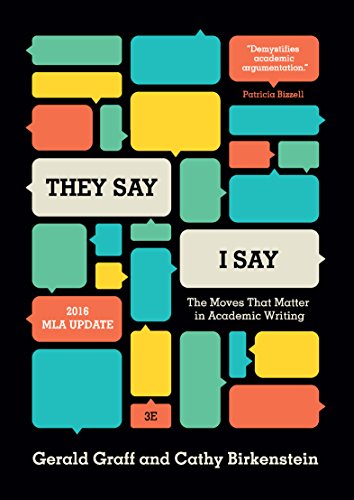
[I993.Ebook] Ebook "They Say / I Say": The Moves That Matter in Academic Writing, with 2016 MLA Update (Third Edition), by Gerald Graff, Cathy Birkenstein

Ebook "They Say / I Say": The Moves That Matter in Academic Writing, with 2016 MLA Update (Third Edition), by Gerald Graff, Cathy Birkenstein

The advantages to take for reading guides "They Say / I Say": The Moves That Matter In Academic Writing, With 2016 MLA Update (Third Edition), By Gerald Graff, Cathy Birkenstein are pertaining to improve your life quality. The life high quality will not just concerning the amount of expertise you will get. Even you check out the enjoyable or amusing e-books, it will certainly aid you to have enhancing life top quality. Feeling enjoyable will certainly lead you to do something perfectly. In addition, the e-book "They Say / I Say": The Moves That Matter In Academic Writing, With 2016 MLA Update (Third Edition), By Gerald Graff, Cathy Birkenstein will certainly give you the driving lesson to take as a great factor to do something. You may not be worthless when reviewing this publication "They Say / I Say": The Moves That Matter In Academic Writing, With 2016 MLA Update (Third Edition), By Gerald Graff, Cathy Birkenstein


"They Say / I Say": The Moves That Matter in Academic Writing, with 2016 MLA Update (Third Edition), by Gerald Graff, Cathy Birkenstein


Ebook "They Say / I Say": The Moves That Matter in Academic Writing, with 2016 MLA Update (Third Edition), by Gerald Graff, Cathy Birkenstein

"They Say / I Say": The Moves That Matter In Academic Writing, With 2016 MLA Update (Third Edition), By Gerald Graff, Cathy Birkenstein. Adjustment your routine to put up or squander the moment to just talk with your buddies. It is done by your everyday, don't you feel tired? Now, we will certainly show you the brand-new practice that, really it's an older routine to do that could make your life more qualified. When really feeling burnt out of always chatting with your close friends all downtime, you can find the book qualify "They Say / I Say": The Moves That Matter In Academic Writing, With 2016 MLA Update (Third Edition), By Gerald Graff, Cathy Birkenstein then review it.

Reading routine will certainly consistently lead individuals not to pleased reading "They Say / I Say": The Moves That Matter In Academic Writing, With 2016 MLA Update (Third Edition), By Gerald Graff, Cathy Birkenstein, a publication, 10 publication, hundreds books, and also a lot more. One that will make them really feel pleased is finishing reading this book "They Say / I Say": The Moves That Matter In Academic Writing, With 2016 MLA Update (Third Edition), By Gerald Graff, Cathy Birkenstein as well as obtaining the notification of the e-books, after that discovering the other following e-book to read. It continues more and also more. The moment to finish checking out a book "They Say / I Say": The Moves That Matter In Academic Writing, With 2016 MLA Update (Third Edition), By Gerald Graff, Cathy Birkenstein will be consistently various depending upon spar time to spend; one instance is this "They Say / I Say": The Moves That Matter In Academic Writing, With 2016 MLA Update (Third Edition), By Gerald Graff, Cathy Birkenstein

Now, just how do you know where to buy this book "They Say / I Say": The Moves That Matter In Academic Writing, With 2016 MLA Update (Third Edition), By Gerald Graff, Cathy Birkenstein Never ever mind, now you may not visit the publication store under the brilliant sunlight or night to browse the e-book "They Say / I Say": The Moves That Matter In Academic Writing, With 2016 MLA Update (Third Edition), By Gerald Graff, Cathy Birkenstein We below consistently aid you to locate hundreds sort of book. One of them is this e-book entitled "They Say / I Say": The Moves That Matter In Academic Writing, With 2016 MLA Update (Third Edition), By Gerald Graff, Cathy Birkenstein You could visit the web link page supplied in this set and afterwards go for downloading and install. It will not take more times. Simply hook up to your net access as well as you can access guide "They Say / I Say": The Moves That Matter In Academic Writing, With 2016 MLA Update (Third Edition), By Gerald Graff, Cathy Birkenstein on-line. Obviously, after downloading "They Say / I Say": The Moves That Matter In Academic Writing, With 2016 MLA Update (Third Edition), By Gerald Graff, Cathy Birkenstein, you might not publish it.

You can conserve the soft data of this e-book "They Say / I Say": The Moves That Matter In Academic Writing, With 2016 MLA Update (Third Edition), By Gerald Graff, Cathy Birkenstein It will rely on your extra time as well as tasks to open and also review this publication "They Say / I Say": The Moves That Matter In Academic Writing, With 2016 MLA Update (Third Edition), By Gerald Graff, Cathy Birkenstein soft data. So, you might not hesitate to bring this publication "They Say / I Say": The Moves That Matter In Academic Writing, With 2016 MLA Update (Third Edition), By Gerald Graff, Cathy Birkenstein all over you go. Just include this sot data to your gadget or computer disk to allow you check out each time and also all over you have time.

THIS TITLE HAS BEEN UPDATED TO REFLECT THE 2016 MLA UPDATE.

The New York Times best-selling book on academic writing―in use at more than 1,500 schools.

“They Say / I Say” identifies the key rhetorical moves in academic writing, showing students how to frame their arguments in the larger context of what others have said and providing templates to help them make those moves. And, because these moves are central across all disciplines, the book includes chapters on writing in the sciences, writing in the social sciences, and―new to this edition―writing about literature.

  • Sales Rank: #5179 in Books
  • Published on: 2016-10-27
  • Original language: English
  • Number of items: 1
  • Dimensions: 7.40" h x .50" w x 5.30" l,
  • Binding: Paperback
  • 352 pages

Review
The best tribute to "They Say / I Say" I've heard is this, from a student: "This is one book I'm not selling back to the bookstore." Nods all around the room. The students love this book. --Christine Ross, Quinnipiac University

The argument of this book is important--that there are "moves" to academic writing . . . and that knowledge of them can be generative. The template format is a good way to teach and demystify the moves that matter. I like this book a lot. --David Bartholomae, University of Pittsburgh

A brilliant book. . . . It's like a membership card in the academic club. --Eileen Seifert, DePaul University

Demystifies academic argumentation. --Patricia Bizzell, College of the Holy Cross"

This book demystifies rhetorical moves, tricks of the trade that many students are unsure about. It s reasonable, helpful, nicely written . . . and hey, it s true. I would have found it immensely helpful myself in high school and college. --Mike Rose, University of California, Los Angeles"

The best tribute to They Say / I Say I ve heard is this, from a student: This is one book I m not selling back to the bookstore. Nods all around the room. The students love this book. --Christine Ross, Quinnipiac University"

The argument of this book is important that there are moves to academic writing . . . and that knowledge of them can be generative. The template format is a good way to teach and demystify the moves that matter. I like this book a lot. --David Bartholomae, University of Pittsburgh"

A brilliant book. . . . It s like a membership card in the academic club. --Eileen Seifert, DePaul University"

Students need to walk a fine line between their work and that of others, and this book helps them walk that line, providing specific methods and techniques for introducing, explaining, and integrating other voices with their own ideas. --Libby Miles, University of Rhode Island"

This book uncovers the rhetorical conventions that transcend disciplinary boundaries, so that even freshmen, newcomers to the academy, are immediately able to join in the conversation. --Margaret Weaver, Missouri State University"

About the Author
Gerald Graff, a professor of English and education at the University of Illinois at Chicago and 2008 president of the Modern Language Association of America, has had a major impact on teachers through such books as Professing Literature: An Institutional History, Beyond the Culture Wars: How Teaching the Conflicts Can Revitalize American Education, and Clueless in Academe: How Schooling Obscures the Life of the Mind.

Cathy Birkenstein is a lecturer in English at the University of Illinois at Chicago. She has published essays on writing in College English, and, with Gerald Graff in The Chronicle of Higher Education, Academe, and College Composition and Communication.

Most helpful customer reviews

121 of 127 people found the following review helpful.
My Ivy League mentor impressed by improvements I made using tips from this book
By Sarah R.
I am in a Ph.D. program at Cornell University, but having already completed an undergrad and a Master's degree, I thought my writing was pretty good. However, after using the tips from this book, my Ivy League professor told me my work had substantially improved. I absolutely recommend this book to anyone looking to improve their writing. I also recommend "Making Sense in the Life Sciences: A Student's Guide to Writing and Research" for anyone looking to help organize lots of information into a logical flow/argument.

11 of 11 people found the following review helpful.
I say...worth every penny.
By K. N. Culberson
I was given this book as a gift from my mentor during my first year of teaching high school, and haven't stopped using it since. I teach 8th grade at the moment, and this can easily be modified and used in middle and high school as well as college. It is the definitive text for argumentative writing. It has a collection of sentence stems/starters'templates for every circumstance (e.g. agreeing with a rebuttal) as well as a section devoted to transitions, verbs for making a claim, etc. It takes much of the guesswork out of writing an argumentative essay. We know that writing at the college level is expository or argumentative. This is the one book you need to get in order to write well. That's what I SAY. And that's what THEY SAY.

31 of 33 people found the following review helpful.
A Major Resource for Incorporating Others' Ideas into a College-Level Argument
By Dbrady3702
This book could be used for advanced HS students in its entirety. With scaffolding, the book is a fruitful resource for explaining and supporting the writing of the college level argument. The templates, though they may seem simplistic or mechanical, provide helpful models and scaffolds for the many "moves" in the written argument. The book doesn't cover rhetorical devices, but I have found that teaching each separately helps students.

The explicit professional examples and the templates address one of the greatest difficulties in the writing of so many students, incorporating quotations smoothly, what "They Say," and helping students maintain their voice in what "I say."

See all 1199 customer reviews...

"They Say / I Say": The Moves That Matter in Academic Writing, with 2016 MLA Update (Third Edition), by Gerald Graff, Cathy Birkenstein PDF
"They Say / I Say": The Moves That Matter in Academic Writing, with 2016 MLA Update (Third Edition), by Gerald Graff, Cathy Birkenstein EPub
"They Say / I Say": The Moves That Matter in Academic Writing, with 2016 MLA Update (Third Edition), by Gerald Graff, Cathy Birkenstein Doc
"They Say / I Say": The Moves That Matter in Academic Writing, with 2016 MLA Update (Third Edition), by Gerald Graff, Cathy Birkenstein iBooks
"They Say / I Say": The Moves That Matter in Academic Writing, with 2016 MLA Update (Third Edition), by Gerald Graff, Cathy Birkenstein rtf
"They Say / I Say": The Moves That Matter in Academic Writing, with 2016 MLA Update (Third Edition), by Gerald Graff, Cathy Birkenstein Mobipocket
"They Say / I Say": The Moves That Matter in Academic Writing, with 2016 MLA Update (Third Edition), by Gerald Graff, Cathy Birkenstein Kindle

"They Say / I Say": The Moves That Matter in Academic Writing, with 2016 MLA Update (Third Edition), by Gerald Graff, Cathy Birkenstein PDF

"They Say / I Say": The Moves That Matter in Academic Writing, with 2016 MLA Update (Third Edition), by Gerald Graff, Cathy Birkenstein PDF

"They Say / I Say": The Moves That Matter in Academic Writing, with 2016 MLA Update (Third Edition), by Gerald Graff, Cathy Birkenstein PDF

Tuesday, 16 November 2010

[B558.Ebook] Get Free Ebook The CERT Guide to Insider Threats: How to Prevent, Detect, and Respond to Information Technology Crimes (Theft, Sabotage, Fraud) (SEI Serie

Get Free Ebook The CERT Guide to Insider Threats: How to Prevent, Detect, and Respond to Information Technology Crimes (Theft, Sabotage, Fraud) (SEI Serie

Be the very first to purchase this e-book now and also get all reasons you should read this The CERT Guide To Insider Threats: How To Prevent, Detect, And Respond To Information Technology Crimes (Theft, Sabotage, Fraud) (SEI Serie Guide The CERT Guide To Insider Threats: How To Prevent, Detect, And Respond To Information Technology Crimes (Theft, Sabotage, Fraud) (SEI Serie is not only for your tasks or need in your life. Books will consistently be a buddy in every single time you read. Now, allow the others learn about this web page. You can take the perks and discuss it additionally for your close friends as well as individuals around you. By in this manner, you can really get the definition of this book The CERT Guide To Insider Threats: How To Prevent, Detect, And Respond To Information Technology Crimes (Theft, Sabotage, Fraud) (SEI Serie beneficially. Just what do you assume for our idea here?

The CERT Guide to Insider Threats: How to Prevent, Detect, and Respond to Information Technology Crimes (Theft, Sabotage, Fraud) (SEI Serie

The CERT Guide to Insider Threats: How to Prevent, Detect, and Respond to Information Technology Crimes (Theft, Sabotage, Fraud) (SEI Serie


The CERT Guide to Insider Threats: How to Prevent, Detect, and Respond to Information Technology Crimes (Theft, Sabotage, Fraud) (SEI Serie

Get Free Ebook The CERT Guide to Insider Threats: How to Prevent, Detect, and Respond to Information Technology Crimes (Theft, Sabotage, Fraud) (SEI Serie

The CERT Guide To Insider Threats: How To Prevent, Detect, And Respond To Information Technology Crimes (Theft, Sabotage, Fraud) (SEI Serie. Let's read! We will commonly discover out this sentence almost everywhere. When still being a childrens, mother utilized to purchase us to always review, so did the educator. Some publications The CERT Guide To Insider Threats: How To Prevent, Detect, And Respond To Information Technology Crimes (Theft, Sabotage, Fraud) (SEI Serie are completely reviewed in a week as well as we need the commitment to support reading The CERT Guide To Insider Threats: How To Prevent, Detect, And Respond To Information Technology Crimes (Theft, Sabotage, Fraud) (SEI Serie Exactly what around now? Do you still like reading? Is reviewing only for you that have commitment? Absolutely not! We here provide you a brand-new book qualified The CERT Guide To Insider Threats: How To Prevent, Detect, And Respond To Information Technology Crimes (Theft, Sabotage, Fraud) (SEI Serie to review.

It is not secret when hooking up the writing abilities to reading. Reviewing The CERT Guide To Insider Threats: How To Prevent, Detect, And Respond To Information Technology Crimes (Theft, Sabotage, Fraud) (SEI Serie will certainly make you obtain even more sources and also sources. It is a manner in which can enhance exactly how you overlook and recognize the life. By reading this The CERT Guide To Insider Threats: How To Prevent, Detect, And Respond To Information Technology Crimes (Theft, Sabotage, Fraud) (SEI Serie, you could more than what you obtain from various other book The CERT Guide To Insider Threats: How To Prevent, Detect, And Respond To Information Technology Crimes (Theft, Sabotage, Fraud) (SEI Serie This is a well-known book that is released from popular author. Seen kind the writer, it can be relied on that this book The CERT Guide To Insider Threats: How To Prevent, Detect, And Respond To Information Technology Crimes (Theft, Sabotage, Fraud) (SEI Serie will certainly provide several motivations, regarding the life and encounter as well as every little thing within.

You may not should be doubt concerning this The CERT Guide To Insider Threats: How To Prevent, Detect, And Respond To Information Technology Crimes (Theft, Sabotage, Fraud) (SEI Serie It is not difficult method to obtain this publication The CERT Guide To Insider Threats: How To Prevent, Detect, And Respond To Information Technology Crimes (Theft, Sabotage, Fraud) (SEI Serie You can simply visit the distinguished with the link that we supply. Right here, you could purchase the book The CERT Guide To Insider Threats: How To Prevent, Detect, And Respond To Information Technology Crimes (Theft, Sabotage, Fraud) (SEI Serie by online. By downloading and install The CERT Guide To Insider Threats: How To Prevent, Detect, And Respond To Information Technology Crimes (Theft, Sabotage, Fraud) (SEI Serie, you could find the soft data of this book. This is the local time for you to begin reading. Even this is not printed book The CERT Guide To Insider Threats: How To Prevent, Detect, And Respond To Information Technology Crimes (Theft, Sabotage, Fraud) (SEI Serie; it will exactly offer more perks. Why? You could not bring the printed publication The CERT Guide To Insider Threats: How To Prevent, Detect, And Respond To Information Technology Crimes (Theft, Sabotage, Fraud) (SEI Serie or only stack the book in your property or the office.

You can finely add the soft documents The CERT Guide To Insider Threats: How To Prevent, Detect, And Respond To Information Technology Crimes (Theft, Sabotage, Fraud) (SEI Serie to the gizmo or every computer hardware in your office or residence. It will certainly assist you to always proceed reading The CERT Guide To Insider Threats: How To Prevent, Detect, And Respond To Information Technology Crimes (Theft, Sabotage, Fraud) (SEI Serie every time you have leisure. This is why, reading this The CERT Guide To Insider Threats: How To Prevent, Detect, And Respond To Information Technology Crimes (Theft, Sabotage, Fraud) (SEI Serie does not offer you problems. It will certainly provide you important resources for you that want to begin writing, writing about the similar publication The CERT Guide To Insider Threats: How To Prevent, Detect, And Respond To Information Technology Crimes (Theft, Sabotage, Fraud) (SEI Serie are different book area.

The CERT Guide to Insider Threats: How to Prevent, Detect, and Respond to Information Technology Crimes (Theft, Sabotage, Fraud) (SEI Serie

Since 2001, the CERT� Insider Threat Center at Carnegie Mellon University’s Software Engineering Institute (SEI) has collected and analyzed information about more than seven hundred insider cyber crimes, ranging from national security espionage to theft of trade secrets. The CERT� Guide to Insider Threats describes CERT’s findings in practical terms, offering specific guidance and countermeasures that can be immediately applied by executives, managers, security officers, and operational staff within any private, government, or military organization.

The authors systematically address attacks by all types of malicious insiders, including current and former employees, contractors, business partners, outsourcers, and even cloud-computing vendors. They cover all major types of insider cyber crime: IT sabotage, intellectual property theft, and fraud. For each, they present a crime profile describing how the crime tends to evolve over time, as well as motivations, attack methods, organizational issues, and precursor warnings that could have helped the organization prevent the incident or detect it earlier. Beyond identifying crucial patterns of suspicious behavior, the authors present concrete defensive measures for protecting both systems and data.

This book also conveys the big picture of the insider threat problem over time: the complex interactions and unintended consequences of existing policies, practices, technology, insider mindsets, and organizational culture. Most important, it offers actionable recommendations for the entire organization, from executive management and board members to IT, data owners, HR, and legal departments.

With this book, you will find out how to

  • Identify hidden signs of insider IT sabotage, theft of sensitive information, and fraud
  • Recognize insider threats throughout the software development life cycle
  • Use advanced threat controls to resist attacks by both technical and nontechnical insiders
  • Increase the effectiveness of existing technical security tools by enhancing rules, configurations, and associated business processes
  • Prepare for unusual insider attacks, including attacks linked to organized crime or the Internet underground

By implementing this book’s security practices, you will be incorporating protection mechanisms designed to resist the vast majority of malicious insider attacks.

  • Sales Rank: #255196 in Books
  • Published on: 2012-02-03
  • Original language: English
  • Number of items: 1
  • Dimensions: 9.20" h x 1.10" w x 7.30" l, 1.77 pounds
  • Binding: Hardcover
  • 432 pages

Review

“For years, researchers at the�CERT Insider Threat Center at Carnegie Mellon’s Software Engineering Institute�have been collecting and studying data on real-world insider incidents. This year, they published a book cataloging the results of their research, called�The CERT Guide to Insider Threats. This book is an invaluable guide to establishing effective processes for managing the risk of insider attacks, and it should be on every security professional’s wish list this year. In general, the insider threat drives home the point that perimeter defenses are no longer enough. IT organizations also need to be able to see into their internal networks to identify suspicious activity.”

-- Tom Cross, Director of Security Research at Lancope, guest writing for Forbes CIO Central

About the Author

Dawn Cappelli, CISSP,�is Technical Manager of the CERT Insider Threat Center and the Enterprise Threat and Vulnerability Management Team at Carnegie Mellon University’s Software Engineering Institute (SEI). She has spent the past decade working with organizations such as the U.S. Secret Service and Department of Homeland Security in protecting the United States against insider threats. Andrew Moore is Lead Researcher in the CERT Insider Threat Center and Senior Member of Technical Staff at SEI. Randall Trzeciak is a Senior Member of Technical Staff at SEI, and Technical Team Lead for the Insider Threat Research Group at the CERT Insider Threat Center.

Most helpful customer reviews

7 of 9 people found the following review helpful.
Definitive resource on insider threats
By Ben Rothke
While Julius Caesar likely never said "Et tu, Brute?" the saying associated with his final minutes has come to symbolize the ultimate insider betrayal.

In The CERT Guide to Insider Threats: How to Prevent, Detect, and Respond to Information Technology Crimes, authors Dawn Cappelli, Andrew Moore and Randall Trzeciak of the CERT Insider Threat Center provide incontrovertible data and an abundance of empirical evidence, which creates an important resource on the topic of insider threats. There are thousands of companies that have uttered modern day versions of Et tu, Brute due to insidious insider attacks and the book documents many of them.

The book is based on work done at the CERT Insider Threat Center, which has been researching this topic for the last decade. The data the threat center has access to is unparalleled, which in turn makes this the definitive book on the topic. The threat center has investigated nearly 1,000 incidents and their data sets on the topic are unrivaled. With that, the book truly needs to be on the desktop of everyone tasked with data security and intellectual property protection.

The book provides a unique perspective on insider threats as the CERT Insider Threat Center pioneered the study of the topic, and has exceptional and empirical data to back up their findings. While there are many books on important security topics such as firewalls, encryption, identity management and more; The CERT Guide to Insider Threats is the one of the first to formally and effectively tackle the extraordinary devastating problem of trusted insiders who misappropriate data.

In the introduction, the authors write that a common misconception is that insider threat risk management is the responsibility of IT and information security staff members exclusively. The reality is that it is the responsibility of senior management to ensure that there is an overarching program to deal with insider threats at the enterprise level. Surpassingly and shockingly, far too few organizations have insider threat programs in place, and the book has scores of stories and case studies on those organizations that have become victims. While senior management created information security solutions to secure the perimeter; they were oblivious to the data leakage emanating from the interior network.

The authors reiterate that it is critical that all levels of management recognize and acknowledge the threat posed by insiders and take appropriate steps to mitigate malicious insiders. While it is impossible to stop every attack, what management can certainly do is build resiliency into their organizations infrastructure and business processes. This enables the organization to detect the attacks earlier and minimize the financial and operational impact. The book provides the specific details on how an organization can precisely do that.

In 9 detailed chapters and 6 appendices, the book provides a comprehensive and exhaustive analysis of the problem and menace of insider threats. After completing the book, one is well-prepared to initiate an insider threat program. The book provides examples of insider crimes from nearly every industry segment and ample data to share with management to convince them that the threats, both to their intellectual property and corporate profits, are very real.

After a high-level overview of the topic in chapter 1, the next chapter gets into the details of insider IT sabotage. While some think that stopping IT sabotage is next to impossible, the authors detail and have identified distinct patterns in nearly every IT sabotage case. The book details those patterns and also presents mitigation strategies, both technical and non-technical, to deal with those threats.

The chapter provides fascinating insights into how these crimes are carried out. The authors note that by their very nature, these attacks require technical sophistication and privileged access and are usually carried out by sysadmins, DBA's and programmers. A surprising CERT finding is that the majority of the attacks occur after the insider has been terminated or quit the organization. Part of the problem is that many organizations don't have a process in place to immediate terminate access when a worker resigns or is fired. In addition, 25% of the cases were carried out by full-time contractors.

Chapter 3 provides an intriguing look at the issue of insider theft of intellectual property (IP). Any firm that has a sizable amount invested in their IP (i.e., anything you can put on a USB stick) needs to take this chapter to heart. One of the many misconceptions CERT research has uncovered on this topic is that sysadmins are indeed not the biggest threat to IP, even though they have complete access to networks, systems and data.

According to the CERT data, they have not found a single case in which a sysadmin stole IP. Rather the biggest threat to IP is insider theft by scientists, engineers, programmers or salespeople. Also, CERT found that about a third of the IP cases were carried out for the benefit of a foreign government of organization, with China having more cases of IP theft than the other 9 countries combined.

Given the nature of China and its appetite for data theft, the book is surprisingly silent on specific suggestions in which to deal with threats from China. I would have liked to have seen at least a chapter dedicated to this topic.

The chapter continues and provides detailed lists of issues leading to job dissatisfaction that can lead a trusted employee or contractor to commit IP theft, and provides detailed steps on what companies can do to stop it.

Chapter 4 details everything you need to know about insider fraud. A fascinating statistic detailed is that the average insider fraud crime spans about 15 months, with half of the crimes lasting 5 months or more. The authors write that insider fraud is typically a long and ingoing crime. All of this is happening, over the course of months and years, and the organizations being pilfered are oblivious to it.

The book is worth reading for chapter 6 alone, which details best practices for the prevention and detection of insider threats. The best practices in chapter 6 give the reader a framework for establishing an insider threat program. Many of the best practices detailed are elements of a good security program, so they should not be news to anyone. Some of the best practices include: security awareness training, physical security controls, separation of duties, and perhaps the most blatantly obvious suggestion of them all: deactivate access following termination.

Another fascinating fact detailed in the book is that almost all insiders involved in acts of IT sabotage displayed behavioral indicators prior to committing their crimes. Some of those indicators include: conflicts with coworkers or supervisors, improper use of data assets, sanctions and rule violations. Organizations that act on these precursors can prevent the insider crimes from taking place.

Aside from its lack of coverage on how to specifically deal with the China threat, the only other lacking in the book is that in all of the examples and case studies, even those whose breaches are publically known, organizations are not mentioned by name.

According to author Dawn Cappelli, Technical Manager at the CERT Insider Threat Center, they took that approach based on interviews for approximately 230 of their cases, with prosecutors, investigators, victim organization, or convicted insiders. In those interviews they guaranteed confidentiality of the information they obtained. Therefore, CERT considers the success of their research directly related to their reputation in the community for being trustworthy for maintaining confidentiality. While there reasoning makes sense, anonymous case studies are often unsatisfying

Insider threats are pervasive and undisputable. Organizations such as the CERT Insider Threat Center and individuals like Antonio Rucci provide vital services evangelizing about this critical topic. This entertaining video of Rucci from DEFCON 17 is a great primer on the topic.

Most of the firms who fall victim to insider threats are oblivious to them as they occur. The book details effective and operational security practices which can help every organization create an insider threat program to counterattack the majority of insider attacks.

When it comes to insider threats, the only way to avert them is to have a prevention program in place. In The CERT Guide to Insider Threats: How to Prevent, Detect, and Respond to Information Technology Crimes, the authors have created an invaluable guidebook, with myriad details in which to enable the reader do that. The facts around insider threats speak for themselves. Anyone charged with protection of corporate data should ensure this book is on their required reading list. If not, and they fall victim to an insider attack, they have no one to blame but themselves.

7 of 9 people found the following review helpful.
A very very important topic for all those in IT
By T Anderson
Working as a Software Architect one of the main concerns we always have is Security. At an application level that can usually be easily implemented if you are up to speed with the latest industry standards and best practices for the technology you are working in.

Working as an Enterprise Architect, security becomes a much broader subject. Insider threats become part of the picture and there is no cookie cutter solution for them. I have seen plenty of potential issues thwarted, and over the years working as a consultant I have witnessed plenty of successful insider attacks.

One of my first experiences with insider threat was when I was still in the engineering field. We used an email product called Pega eMail. A few of us discovered that no password was required to log into another person's email if it was done in a certain way. We would do goofy stuff like rename each other's folders to stupid names. We got bored with it in about a day and forgot about it. As time went on our company was purchased by an England company.

The new parent company sent in a new president. One of the new president's jobs was to reorganize. People were let go and offices were moved. Some of the people in one of the departments decided they wanted the inside scoop. Apparently they had learned about the email trick. They began reading all the new presidents emails. From what I heard one of them mentioned something in a meeting that was confidential between the new president and the company's London office.

The IT security team started to investigate and discovered the email product flaw. They then monitored the IP logging into the presidents email and discovered the entire department was guilty. One Friday afternoon they were all escorted out of the building.

I have experienced several insider threat scenarios but the worst one was at a small company that decided it was a good idea to hire a hacker to be the lead network administrator. At the time he was very good at hacking, but not so good with ethical hacking. Actually he wasn't so good with ethics at all. I am pretty sure he had a drug problem also. Either that or he was just downright nuts. He came and went as he pleased. In the weeks leading up to the incident he was missing for days at a time. When he did show up, it was better to avoid him. He was a mess.

They eventually called him in and told him he had to straighten up, or else. He politely apologized, said no problem, and proceeded to change all the network and server passwords and remove everyone else's access. He then disappeared for good. It took the company a few days to figure out what had happened. There only choice was to completely rebuild a mirror company infrastructure. It took weeks and cost them a ton of cash.

That is just two of many things I have witnessed over the years as a consultant. You like to think you work with people you can trust, but everyone has the potential for having an off day and making a bad choice. The problem is being able to identify those individuals that are heading towards their bad day and their bad decision. This book is a tremendous resource in helping with that.

Below are the chapters and appendices included in the book.

Chapter 1: Overview
Chapter 2: Insider IT Sabotage
Chapter 3: Insider Theft of Intellectual Property
Chapter 4: Insider Fraud
Chapter 5: Insider Threat Issues in the Software Development Life Cycle
Chapter 6: Best Practices for the Prevention and Detection of Insider Threats
Chapter 7: Technical Insider Threat Controls
Chapter 8: Case Examples
Chapter 9: Conclusion and Miscellaneous Issues

Appendix A: Insider Threat Center Products and Services
Appendix B: Deeper Dive into the Data
Appendix C: CyberSecurity Watch Survey
Appendix D: Insider Threat Database Structure
Appendix E: Insider Threat Training Simulation: MERIT InterActive
Appendix F: System Dynamics Background

This book has categorized insider threats into IT Sabotage, theft of intellectual property (IP), and fraud. After the introduction in chapter 1 the book has a chapter on each category. It mainly covers attacks by current and former employees, contractors, and trusted business partners. They each cover patterns related to the crimes and offer mitigation strategies.

Insider IT Sabotage covers patterns like Personal Predispositions, Disgruntlement and Unmet Expectations, Behavioral Precursors, Stressful Events, Technical Precursors and Access Paths, and The Trust Trap. Some of the mitigation strategies include Handling Disgruntlement through Positive Intervention, Eliminating Unknown Access Paths, A Risk-Based Approach to Prioritizing Alerts, Measures upon Demotion or Termination, and Test Backup and Recovery Process.

Insider Theft of Intellectual Property patterns include Insider Contribution and Entitlement, Insider Dissatisfaction, Insider Theft and Deception, Insider Planning of Theft, and Increasing Access. This chapter also cover the who, what, and why of the crimes. Some of the mitigation strategies covered include Network Data Exfiltration, Host Data Exfiltration, Physical Exfiltration, Exfiltration of Specific Types of IP, and Concealment.

Insider Fraud patterns include Origins of Fraud, Outsider Facilitation, Recruiting Other Insiders into the Scheme, and Insider Stressors. This chapter also includes a cool who, why, what, and how section. This chapter countermeasure such as watching out for Inadequate Auditing of Critical and Irregular Processes, Employee/Coworker Susceptibility to Recruitment, Financial Problems, and Excessive Access Privilege.

The authors use MERIT (Management and Education of the Risk of Insider Threat) diagrams to design the most effective mitigation strategies. They really help put the threat into context. The really cool thing about the MERIT diagrams in the book is that they are mirrors of actual working system dynamics models. I wish these models were available for download.

The chapter on Insider Threat Issues in the Software Development Life Cycle really points out the importance of following a good SDLC and how a an inadequate job of following one can later lead to exploitations. It covers topics like Separation of Duties, Automated Data Integrity Checks, Exception Handling, Code Reviews, Attribution, System Deployment, and Backups.

Best Practices for the Prevention and Detection of Insider Threats is worth the price of the book. It covers 15 practices. A few of them include Consider Threats from Insiders and Business Partners in Enterprise-Wide Risk Assessments, Institute Periodic Security Awareness Training for All Employees, Anticipate and Manage Negative Workplace Issues, and Monitor and Respond to Suspicious or Disruptive Behavior, Beginning with the Hiring Process. Each principle includes section explaining what you can do, and offers a case study to give you an example of what can happen if you don't.

One of the things I like most about this book is all the examples that are included. They are very interesting. They help to put you in the shoes of a person that may commit a crime. They really will help you identify and head off attacks.

The CERT Insider Threat Center has a ton of additional information available. You can learn a lot form the site, but I highly recommend reading the book. It has put everything together in one place in a logical reading order.

Over all I think every single person that has anything to do with IT should read this book. Even if you don't deal with sensitive data, you are at risk of sabotage.

0 of 0 people found the following review helpful.
Book Review for SDSUG
By Ian Mulqueen - SDSUG member
I found Cappelli, Moore, and Trzeciak's CERT Guide to Insider Threats to be a fascinating read, even considering my limited knowledge level. I knew I was in for some serious mind-stimulation based solely on the length of the preface and acknowledgments. My favorite part of the book is that it is designed so that every chapter can be self-sustaining, and reading the whole book in order isn’t actually necessary – just read chapter 1 and then you are free to read whatever chapter sounds the neatest…or is the most relevant to your situation.

For example, take chapters 1-4. Chapter 1 provides an overview and briefs you on the three types of insider IT threats (as defined by CERT). It also introduces you to the CERT Insider Threat Center and the CERT database. Chapters 2-4 then elaborate on each of the three insider threats introduced in chapter 1, with a chapter dedicated to each threat respectively. One thing to note: this book intentionally chooses to exclude national security espionage.

Chapter 5 covers vulnerabilities in software engineering, exposing a company to malicious insiders. 6 and 7 focus on mitigation, while chapter 8 is chocked full of actual examples from the CERT database. Even Chapter 9, which is advertised as a “conclusion” still has loads of information to present – mostly stuff that didn’t really fit in the other chapters. To top it all off, there are several appendices that are as much must-read material as any of the chapters in this book.

Now, it’s probably relevant to my review that I disclose that I am not in the IT industry…yet. Though I am no spring chicken, I have returned to school the last couple years to study this subject and I do hope to find employment in this field very soon. With that being said, having a book like this to help develop my understanding is invaluable. The layout and design of the book does mean that there are some subjects (even entire chapters) that may not have relevance to everyone, but considering how much of a threat insiders pose (as this book helped me to fully grasp), in my opinion this is a tool more so than a book to read. Granted, I may be quite a ways off from being in a position to implement strategies provided in this book or to even be remotely influential in any kind of threat prevention, but this book does help build a foundation of knowledge that every employee anywhere should have and understand. We’ve all heard the stories of people who try to “stick it to the man”, but what this book really excels at is developing such an awareness of the true threat that insiders pose, that you can’t help but walk away from this book trying to put yourself in the minds of any disgruntled friends/coworkers you may have.

Overall I found the book to be well written and easy to follow. The writers of this book clearly want you to take away some very important information, so they even go so far as to include highlighted Tips and Notes sections throughout the book – and not just a few! Pretty much every few pages there’s at least either a note and/or tip to digest. As a current student, I especially appreciated that this book is written similar to a textbook. Clearly, the people at the CERT threat center want their readers to actually LEARN something (many somethings in fact), versus just being entertained.

Ultimately, though this book is geared for those already embedded in the industry, it is written as an educational tool, giving it value even to those of us who don’t have a wealth of IT experience. I would absolutely recommend this book! For those just curious about how damaging insider threats can truly be, read chapter 1 and then jump to chapter 8. I guarantee after that, you’ll want to delve further into CERT!

See all 11 customer reviews...

The CERT Guide to Insider Threats: How to Prevent, Detect, and Respond to Information Technology Crimes (Theft, Sabotage, Fraud) (SEI Serie PDF
The CERT Guide to Insider Threats: How to Prevent, Detect, and Respond to Information Technology Crimes (Theft, Sabotage, Fraud) (SEI Serie EPub
The CERT Guide to Insider Threats: How to Prevent, Detect, and Respond to Information Technology Crimes (Theft, Sabotage, Fraud) (SEI Serie Doc
The CERT Guide to Insider Threats: How to Prevent, Detect, and Respond to Information Technology Crimes (Theft, Sabotage, Fraud) (SEI Serie iBooks
The CERT Guide to Insider Threats: How to Prevent, Detect, and Respond to Information Technology Crimes (Theft, Sabotage, Fraud) (SEI Serie rtf
The CERT Guide to Insider Threats: How to Prevent, Detect, and Respond to Information Technology Crimes (Theft, Sabotage, Fraud) (SEI Serie Mobipocket
The CERT Guide to Insider Threats: How to Prevent, Detect, and Respond to Information Technology Crimes (Theft, Sabotage, Fraud) (SEI Serie Kindle

The CERT Guide to Insider Threats: How to Prevent, Detect, and Respond to Information Technology Crimes (Theft, Sabotage, Fraud) (SEI Serie PDF

The CERT Guide to Insider Threats: How to Prevent, Detect, and Respond to Information Technology Crimes (Theft, Sabotage, Fraud) (SEI Serie PDF

The CERT Guide to Insider Threats: How to Prevent, Detect, and Respond to Information Technology Crimes (Theft, Sabotage, Fraud) (SEI Serie PDF

Friday, 12 November 2010

[F180.Ebook] Fee Download Management: The New Competitive Landscape with CD and PowerWeb, by Thomas S Bateman, Scott A Snell, Thomas Bateman, Scott Snell

Fee Download Management: The New Competitive Landscape with CD and PowerWeb, by Thomas S Bateman, Scott A Snell, Thomas Bateman, Scott Snell

This book Management: The New Competitive Landscape With CD And PowerWeb, By Thomas S Bateman, Scott A Snell, Thomas Bateman, Scott Snell is expected to be one of the most effective seller publication that will certainly make you feel satisfied to buy as well as review it for completed. As understood can common, every publication will have particular things that will make an individual interested so much. Even it comes from the writer, type, material, or even the publisher. Nevertheless, many people likewise take the book Management: The New Competitive Landscape With CD And PowerWeb, By Thomas S Bateman, Scott A Snell, Thomas Bateman, Scott Snell based upon the motif and title that make them astonished in. and also here, this Management: The New Competitive Landscape With CD And PowerWeb, By Thomas S Bateman, Scott A Snell, Thomas Bateman, Scott Snell is quite advised for you because it has fascinating title and also motif to check out.

Management: The New Competitive Landscape with CD and PowerWeb, by Thomas S Bateman, Scott A Snell, Thomas Bateman, Scott Snell

Management: The New Competitive Landscape with CD and PowerWeb, by Thomas S Bateman, Scott A Snell, Thomas Bateman, Scott Snell


Management: The New Competitive Landscape with CD and PowerWeb, by Thomas S Bateman, Scott A Snell, Thomas Bateman, Scott Snell

Fee Download Management: The New Competitive Landscape with CD and PowerWeb, by Thomas S Bateman, Scott A Snell, Thomas Bateman, Scott Snell

Management: The New Competitive Landscape With CD And PowerWeb, By Thomas S Bateman, Scott A Snell, Thomas Bateman, Scott Snell. In undergoing this life, several individuals always attempt to do as well as get the most effective. New knowledge, experience, session, as well as every little thing that can enhance the life will certainly be done. Nevertheless, lots of people in some cases feel puzzled to obtain those things. Really feeling the minimal of experience and also resources to be far better is one of the does not have to have. However, there is a really basic point that could be done. This is what your educator constantly manoeuvres you to do this. Yeah, reading is the answer. Checking out an e-book as this Management: The New Competitive Landscape With CD And PowerWeb, By Thomas S Bateman, Scott A Snell, Thomas Bateman, Scott Snell and various other recommendations can enrich your life high quality. Exactly how can it be?

Reviewing book Management: The New Competitive Landscape With CD And PowerWeb, By Thomas S Bateman, Scott A Snell, Thomas Bateman, Scott Snell, nowadays, will certainly not compel you to always acquire in the establishment off-line. There is a wonderful area to acquire guide Management: The New Competitive Landscape With CD And PowerWeb, By Thomas S Bateman, Scott A Snell, Thomas Bateman, Scott Snell by online. This web site is the very best site with great deals varieties of book collections. As this Management: The New Competitive Landscape With CD And PowerWeb, By Thomas S Bateman, Scott A Snell, Thomas Bateman, Scott Snell will certainly be in this publication, all books that you need will certainly correct below, too. Simply search for the name or title of the book Management: The New Competitive Landscape With CD And PowerWeb, By Thomas S Bateman, Scott A Snell, Thomas Bateman, Scott Snell You could find what exactly you are looking for.

So, also you require responsibility from the firm, you could not be perplexed any more considering that publications Management: The New Competitive Landscape With CD And PowerWeb, By Thomas S Bateman, Scott A Snell, Thomas Bateman, Scott Snell will always help you. If this Management: The New Competitive Landscape With CD And PowerWeb, By Thomas S Bateman, Scott A Snell, Thomas Bateman, Scott Snell is your best companion today to cover your task or work, you can when feasible get this publication. Just how? As we have actually told recently, just check out the web link that we offer right here. The conclusion is not just the book Management: The New Competitive Landscape With CD And PowerWeb, By Thomas S Bateman, Scott A Snell, Thomas Bateman, Scott Snell that you look for; it is exactly how you will get lots of books to assist your ability as well as capability to have piece de resistance.

We will show you the very best and also best method to obtain publication Management: The New Competitive Landscape With CD And PowerWeb, By Thomas S Bateman, Scott A Snell, Thomas Bateman, Scott Snell in this globe. Lots of compilations that will sustain your duty will be right here. It will make you feel so perfect to be part of this internet site. Ending up being the participant to constantly see exactly what up-to-date from this book Management: The New Competitive Landscape With CD And PowerWeb, By Thomas S Bateman, Scott A Snell, Thomas Bateman, Scott Snell site will certainly make you really feel appropriate to hunt for guides. So, recently, as well as here, get this Management: The New Competitive Landscape With CD And PowerWeb, By Thomas S Bateman, Scott A Snell, Thomas Bateman, Scott Snell to download as well as wait for your priceless worthy.

Management: The New Competitive Landscape with CD and PowerWeb, by Thomas S Bateman, Scott A Snell, Thomas Bateman, Scott Snell

Management: The New Competitive Landscape, by Bateman and Snell, has consistently discussed and explained the traditional, functional approach to management - through planning, organizing, leading, and controlling. But the 6th edition goes a step further, in defining and highlighting with icons, four "bottom line" practices that managers and companies must deliver to their customers: Innovation, Speed, Quality, and Cost. Bateman and Snell's: Management: The New Competitive Landscape, 6e has always been about a series of "firsts": first to have a chapter on diversity, first to devote a section to the environment, and first to relate a "bricks and clicks" theme to explain the challenges of managing in a New Economy. This new edition is no exception with the expansion of such timely topics as ethics and technology.

Management: The New Competitive Reality, 6e shows how managers must utilize the classic principles of management in combination with the practices of the "New Economy" to achieve managerial goals. By reinforcing these new business practices in context with the functional approaches, the authors deliver a unique theme amongst all principles of management texts - how to manage in ways that deliver results. ver results.

  • Sales Rank: #1216956 in Books
  • Published on: 2003-03-11
  • Original language: English
  • Number of items: 1
  • Dimensions: 11.10" h x 1.13" w x 8.60" l, 3.65 pounds
  • Binding: Hardcover

Most helpful customer reviews

6 of 8 people found the following review helpful.
Pedagogical Excellence!
By Khaled Ahmadain
This book is unique in its pedagogical approach. Other management textbooks are just characterized with sound theoretical depth and textual density. However, "Management: The New Competitive Landscape" is distinguished by the capability of its authors to seamlessly blend the theoretical concept with practical, real-life advice using an exceptionally engaging conversational style. Holding a bachelor's degree in business administration as well as an MBA in Management, I completed several management classes and researched advanced management literature in many books. However, I decided to purchase this introductory management reference due to its unprecedented pedagogical style. When I opened the book in the store, I felt like attending a live lecture from the authors directly capturing their knowledge and experiential advice. Thus I learned from this book big time especially from the on-the-job perspective.

4 of 6 people found the following review helpful.
Misleading...
By angathaki
I ordered this book thinking that it was the paperback version of the hardcover "Management: Leading and Collaborating in the Competitive World 8th ed" book (http://www.amazon.com/Management-Leading-Collaborating-Competitive-World/dp/007338142X/ref=sr_1_2?ie=UTF8&s=books&qid=1263329100&sr=8-2). The title, edition, etc are ALL the same in the product descriptions. Even when clicking on the image "to see inside this book", it shows images of the hardcover edition (but it is the 6th ed!). The small yellow circle in the lower right corner of the original image says "This International Student Edition is for use outside of the U.S." (For those of you who you do not have a microscope)

This would not be a problem, except for the fact that it is an INTERNATIONAL version. Thinking it was the same version and that I was saving money for a class, I was disappointed to discover that the books are different. The chapter headings seem to be very similar, but the pages are different, and upon comparing images of the first couple pages the graphics and text are very different. It even says "This book cannot be re-exported from the country to which it is sold by McGraw-Hill. The International Edition is not available in North America." Wow, how on earth did I get it in New Jersey then????

I am sure the book is excellent, but I am EXTREMELY disappointed that the product description and images were so MISLEADING.

Now I have no idea what to do as the semester starts so soon!!! Anyone need the International version??????

1 of 1 people found the following review helpful.
my textbook at a great price
By germanitstudent
My management textbook is a great reference in wonderful shape at a very good price. I payed less than half of what the other college text stores wanted.

See all 11 customer reviews...

Management: The New Competitive Landscape with CD and PowerWeb, by Thomas S Bateman, Scott A Snell, Thomas Bateman, Scott Snell PDF
Management: The New Competitive Landscape with CD and PowerWeb, by Thomas S Bateman, Scott A Snell, Thomas Bateman, Scott Snell EPub
Management: The New Competitive Landscape with CD and PowerWeb, by Thomas S Bateman, Scott A Snell, Thomas Bateman, Scott Snell Doc
Management: The New Competitive Landscape with CD and PowerWeb, by Thomas S Bateman, Scott A Snell, Thomas Bateman, Scott Snell iBooks
Management: The New Competitive Landscape with CD and PowerWeb, by Thomas S Bateman, Scott A Snell, Thomas Bateman, Scott Snell rtf
Management: The New Competitive Landscape with CD and PowerWeb, by Thomas S Bateman, Scott A Snell, Thomas Bateman, Scott Snell Mobipocket
Management: The New Competitive Landscape with CD and PowerWeb, by Thomas S Bateman, Scott A Snell, Thomas Bateman, Scott Snell Kindle

Management: The New Competitive Landscape with CD and PowerWeb, by Thomas S Bateman, Scott A Snell, Thomas Bateman, Scott Snell PDF

Management: The New Competitive Landscape with CD and PowerWeb, by Thomas S Bateman, Scott A Snell, Thomas Bateman, Scott Snell PDF

Management: The New Competitive Landscape with CD and PowerWeb, by Thomas S Bateman, Scott A Snell, Thomas Bateman, Scott Snell PDF